Tout savoir pour réussir l’axe du bac d’anglais : Diversity and Inclusion
L’axe “Territoire et mémoire” (Territory and memory en anglais) invite à réfléchir aux liens entre les lieux, l’histoire et la construction des identités. À travers des exemples issus du monde anglophone – mémoriaux, monuments, frontières, migrations, héritages coloniaux ou paysages marqués par les conflits – il s'agit d'apprendre à analyser la manière dont les sociétés entretiennent, transmettent ou réinterprètent leur mémoire collective. Cet axe est régulièrement mobilisé lors de l’expression orale et de l’expression écrite du bac d’anglais. Sur cette page, découvrez une définition claire de la notion, les principaux thèmes à maîtriser, des exemples culturels incontournables, du vocabulaire utile ainsi que des conseils pour réussir vos épreuves du contrôle continu.
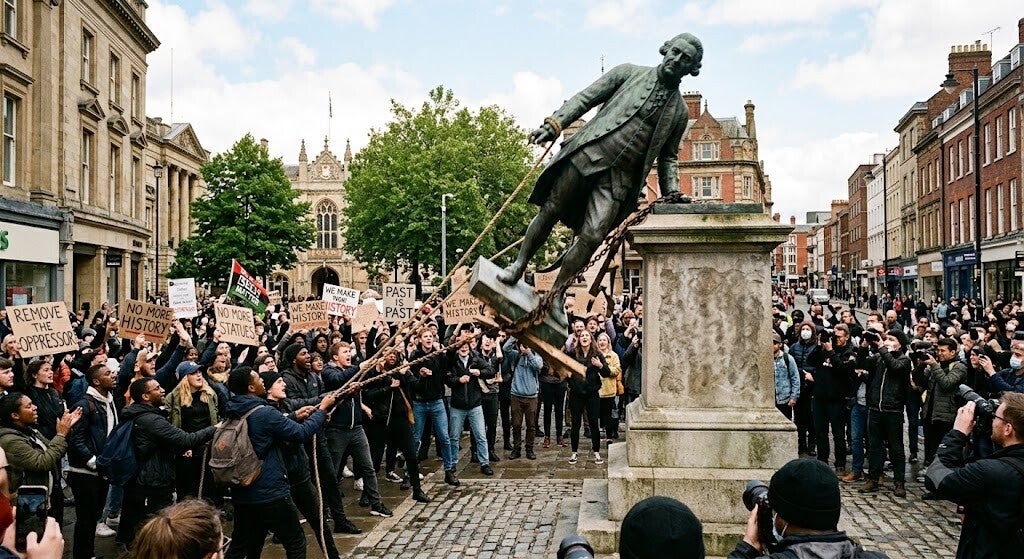
🏛️ Vocabulaire thématique – Territoire et mémoire
Ce vocabulaire est indispensable pour parler du patrimoine, de la mémoire collective, de l'histoire, des monuments, des débats mémoriels et des peuples autochtones.
| Anglais | Français |
|---|---|
| territory | territoire |
| memory | mémoire |
| collective memory | mémoire collective |
| commemoration | commémoration |
| memorial | mémorial, monument aux morts |
| monument | monument |
| statue | statue |
| landmark | point de repère, site emblématique |
| heritage | patrimoine |
| historical site | site historique |
| to commemorate | commémorer |
| to honour | honorer |
| to remember | se souvenir |
| to forget | oublier |
| to erase | effacer |
| to remove | retirer, enlever |
| to topple | déboulonner, renverser |
| to preserve | préserver |
| to restore | restaurer |
| to acknowledge | reconnaître |
| apology | excuses |
| reconciliation | réconciliation |
| native title | titre autochtone |
| indigenous / Aboriginal | autochtone / aborigène |
| First Nations | Premières Nations |
| colonisation | colonisation |
| slavery | esclavage |
| abolition | abolition |
| civil war | guerre civile |
| controversy | controverse |
| debate | débat |
| to rewrite history | réécrire l’histoire |
| historical accuracy | exactitude historique |
| contextualisation | contextualisation |
| plaque | plaque commémorative |
🗣️ Grammaire – Le discours rapporté pour restituer des témoignages
L’axe « Territoire et mémoire » conduit fréquemment à rapporter des paroles, des témoignages ou des textes historiques. Le discours rapporté (reported speech) est donc un outil grammatical essentiel.
A. Rapporter des déclarations (changement de temps)
| Discours direct | Discours rapporté |
|---|---|
| "The statue represents oppression." | She said the statue represented oppression. |
| "We are remembering the victims." | He said they were remembering the victims. |
| "It has changed the city forever." | They said it had changed the city forever. |
| "We will never forget." | She said they would never forget. |
| "You must acknowledge the truth." | He said we had to acknowledge the truth. |
B. Rapporter des questions
| Discours direct | Discours rapporté |
|---|---|
| "Why was the statue removed?" | She asked why the statue had been removed. |
| "Do you support the decision?" | He asked if / whether I supported the decision. |
C. Verbes introducteurs variés
Pour éviter de répéter say et tell, utilisez des verbes plus précis.
| Verbes introducteurs | Exemple |
|---|---|
| say, tell, explain, declare, announce, admit, deny, claim, argue, promise, apologise, insist, remind… | The government announced that it would issue a formal apology. |
| Utiliser un verbe adapté au contexte | The activist insisted that the monuments should be preserved with proper contextualisation. |
D. Structures pour exprimer le regret et la reconnaissance
| Structure | Exemple |
|---|---|
| Exprimer le regret | He regretted that the truth had been hidden for so long. |
| Présenter des excuses officielles | The Prime Minister apologised for the suffering caused to Indigenous communities. |
| Reconnaître une erreur ou un fait | She admitted that the history taught in schools had been incomplete. |
Mémoires et territoires dans le monde anglophone
Le monde anglophone est traversé par des débats mémoriels intenses qui interrogent le lien entre le passé et l’espace. En Australie, la question des terres ancestrales des Aborigènes a été au cœur des luttes pour la reconnaissance. L’arrêt Mabo de la Haute Cour australienne en 1992 a reconnu pour la première fois le concept de native title (titre autochtone), remettant en cause la doctrine de terra nullius (terre sans propriétaire) qui avait justifié la colonisation. Des sites comme Uluru, restitué à ses propriétaires traditionnels, sont devenus des symboles de cette mémoire retrouvée.
Aux États-Unis, les monuments et les noms de lieux liés à l’esclavage et à la Confédération font l’objet de vives controverses. Le mouvement Black Lives Matter a accéléré le retrait de statues célébrant des généraux confédérés dans des villes comme Richmond ou La Nouvelle-Orléans. En 2021, la statue du général Robert E. Lee à Charlottesville, qui avait été à l’origine de violents affrontements en 2017, a finalement été déboulonnée. Pour les uns, retirer ces statues est un acte de justice ; pour les autres, c’est effacer l’histoire.
Au Royaume-Uni, le déboulonnage en 2020 de la statue du marchand d’esclaves Edward Colston à Bristol a marqué un tournant. La statue a été jetée dans le port par des manifestants, un geste salué comme une réappropriation de la mémoire par certains, condamné comme du vandalisme par d’autres. La statue a ensuite été exposée dans un musée, accompagnée d’une contextualisation historique.
Le Canada et les États-Unis sont confrontés à la mémoire douloureuse des pensionnats autochtones. En 2021, la découverte de centaines de tombes anonymes sur les sites d’anciens pensionnats au Canada a provoqué une onde de choc mondiale. Des cérémonies de commémoration ont eu lieu, et le gouvernement canadien a fait des excuses officielles. Aux États-Unis, le Sentier des Larmes (Trail of Tears), parcours de déportation des Cherokees, est désormais balisé et commémoré.
Les lieux de mémoire sont aussi des outils de réconciliation. À New York, le Mémorial du 11 Septembre (Ground Zero) est devenu un lieu de recueillement universel. En Afrique du Sud, l’île de Robben Island, où Nelson Mandela fut emprisonné, est aujourd’hui un musée et un site classé au patrimoine mondial de l’UNESCO, symbole de la lutte contre l’apartheid.
Ainsi, le territoire est un palimpseste où s’inscrivent des couches de mémoire souvent conflictuelles. Les sociétés anglophones sont engagées dans un processus de relecture de leur passé, où les minorités et les peuples autochtones réclament que leur histoire soit inscrite dans l’espace public.
Conflits de mémoire autour des statues dans le monde anglophone
La question des statues est l’un des débats mémoriels les plus visibles dans le monde anglophone. Ces monuments, érigés à une époque donnée pour glorifier certains personnages, sont aujourd’hui contestés au nom d’une relecture du passé.
Le cas Colston (Royaume-Uni)
Edward Colston était un marchand d’esclaves du XVIIᵉ siècle, dont la statue trônait à Bristol depuis 1895. En juin 2020, lors d’une manifestation Black Lives Matter, des manifestants l’ont déboulonnée et jetée dans le port. Ce geste a suscité un débat national. Pour les uns, c’était un acte de justice rendu à la mémoire des victimes de l’esclavage ; pour les autres, une destruction illégale du patrimoine. La statue, repêchée, est désormais exposée au musée de Bristol, inclinée et portant les graffitis laissés par les manifestants, accompagnée d’une exposition sur l’esclavage.
Les statues confédérées (États-Unis)
Aux États-Unis, des centaines de statues honorant des figures de la Confédération ont été retirées depuis 2015, en particulier après les événements de Charleston et de Charlottesville. La controverse est profonde : les opposants à ces statues y voient une glorification du racisme et de la trahison ; les défenseurs évoquent la préservation de l’histoire et du patrimoine sudiste. La décision de retirer la statue équestre du général Lee à Richmond en 2021 a marqué un tournant symbolique.
Le débat sur les figures coloniales (Canada, Australie)
Au Canada, des statues de John A. Macdonald, premier Premier ministre, ont été vandalisées ou retirées en raison de son rôle dans les pensionnats autochtones. En Australie, des manifestations ont ciblé les statues de James Cook, symbole de la colonisation britannique. Ces débats posent une question plus large : comment honorer la mémoire sans effacer l’histoire, et comment réparer sans détruire ?
Les réponses varient : contextualisation par des plaques explicatives, création de nouveaux monuments honorant les victimes, musées consacrés aux histoires occultées. La mémoire n’est pas un bloc figé : elle est un dialogue permanent entre passé, présent et futur.
“The past is never dead. It’s not even past.” — William Faulkner, Requiem for a Nun (1951).
Exercices
Grammaire
-
The mayor said that they were working on a new memorial.
-
She asked why they had torn down the statue.
-
The guide explained to us that this site had been discovered in 1850.
Expression écrite
The debate over controversial statues has divided public opinion in many countries. Should they be removed, or should they remain as reminders of history?
On the one hand, supporters of removal argue that statues of figures linked to slavery or colonialism glorify a painful past. These monuments, they claim, were often erected to assert power, not to record history objectively. Removing them from public spaces is therefore a necessary step toward justice and recognition of past victims. On the other hand, opponents fear that removing statues amounts to erasing history. They argue that it is dangerous to judge the past by today's standards, and that once you start, you may not know where to stop.
Contextualisation appears to be a reasonable compromise. Adding explanatory plaques or moving statues to museums allows for a more complete and critical narrative. For instance, a plaque can explain both the achievements and the crimes of a historical figure. In my opinion, this approach is preferable because it educates rather than destroys. It invites citizens to reflect on history in all its complexity.
To conclude, I believe that the goal should not be to erase the past, but to remember it honestly. Contextualisation transforms a symbol of oppression into a tool for learning and dialogue.
Expression orale
Situation : Vous présentez le document iconographique ci-dessus : Une photographie en couleur d’une rue de Bristol, au Royaume-Uni. Sur un socle en pierre vide, on peut lire une inscription partiellement effacée : « Erected by citizens of Bristol as a memorial of one of the most virtuous and wise sons of their city. » Au pied du socle, un panneau temporaire indique : « Here stood the statue of Edward Colston, slave trader, pulled down by the people on 7 June 2020. » Des fleurs et des messages ont été déposés au sol. En arrière-plan, des passants regardent le socle vide.
Problématique suggérée : How can public spaces reflect changing attitudes towards history?
Points à aborder :
-
Description (socle vide, inscription d’origine, panneau explicatif, fleurs).
-
Signification : le contraste entre la glorification passée et la condamnation présente, la réappropriation de l’espace public par les citoyens.
-
Lien avec l’axe : territoire, mémoire, conflit entre mémoire officielle et mémoire populaire.
-
Opinion personnelle : faut-il laisser les socles vides, les remplacer, ou les contextualiser ?
Compréhension écrite
Article (adapté de The Guardian, 2023)
The Statue Debate: Erasing History or Correcting It?
When a statue of slave trader Robert Milligan was removed from outside the Museum of London Docklands in 2020, campaigners celebrated. “For years, we walked past this statue without knowing who he was,” said local resident Fatima. “Now, we are telling a fuller story.”
The removal was part of a wider movement to re-evaluate public monuments. Across the UK and the US, statues linked to colonialism and slavery have been taken down, relocated or contextualised with new plaques. For supporters, this is a long-overdue correction. “Statues are not history; they are symbols of power,” argues historian Dr Wallace. “Removing them does not erase history – it makes room for a more accurate one.”
However, opponents fear a slippery slope. “Where does it stop?” asks conservative commentator James Brent. “If we judge all historical figures by today’s standards, almost no one will survive. This is not about justice; it’s about erasing our heritage.”
Some cities have chosen a middle path. In Edinburgh, a statue of Henry Dundas, who delayed the abolition of slavery, now includes a plaque explaining both his achievements and his role in perpetuating the slave trade. “Contextualisation is not a compromise,” says museum director Sarah Kim. “It is an invitation to think critically.”
Questions :
-
What was the reaction of campaigners to the removal of Robert Milligan’s statue?
-
According to historian Dr Wallace, why does removing a statue not erase history?
-
What is James Brent’s main concern about removing statues?
-
How did the city of Edinburgh deal with the statue of Henry Dundas?
-
Explain what Sarah Kim means by “contextualisation is an invitation to think critically.”
Compréhension orale
script d'un reportage radio
Voix : This is National Public Radio. We’re at the National Museum of African American History and Culture in Washington, D.C., speaking with historian Dr Elaine Freeman. Dr Freeman, this museum opened in 2016. Why was it so important to create this space?
Dr Freeman : “For centuries, African American history was marginalised. It was told as a footnote, not as a central part of the American story. This museum places it right on the National Mall, alongside monuments to Washington and Lincoln. It says: this history belongs here.”
Journaliste : What role does a physical space play in shaping memory?
Dr Freeman : “A physical space makes memory tangible. When visitors walk through a slave cabin, when they see Emmett Till’s casket, it’s not an abstract concept anymore. It becomes real. That’s why territories and buildings matter. They are anchors for collective memory.”
Journaliste : Some critics say museums like this reinforce division rather than unity. What’s your response?
Dr Freeman : “I think that’s a misunderstanding. This is not a museum of division. It’s a museum of truth. And truth is the only foundation for genuine unity. You cannot heal what you refuse to acknowledge.”
Questions :
-
According to Dr Freeman, why is the location of the museum significant?
-
How does she explain the role of a physical space in shaping memory?
-
What criticism do some people make of this museum?
-
How does Dr Freeman respond to that criticism?
-
Explain Dr Freeman’s statement: “You cannot heal what you refuse to acknowledge.”
Contrôle continu
A. Compréhension écrite (10 points)
Lisez le texte suivant (adapté d’un article sur les excuses officielles du gouvernement australien) :
“On 13 February 2008, Australian Prime Minister Kevin Rudd stood before Parliament and delivered a historic apology. He addressed the ‘Stolen Generations’ – tens of thousands of Aboriginal and Torres Strait Islander children who had been forcibly removed from their families between 1910 and 1970. The policy aimed to assimilate Indigenous children into white society, often in institutions or foster homes. In his speech, Rudd acknowledged the ‘profound grief, suffering and loss’ caused. ‘For the pain, suffering and hurt of these Stolen Generations, their descendants and for their families left behind, we say sorry,’ he declared. The apology was broadcast live across the country and welcomed by millions of Australians. However, some critics argued that words were not enough and called for concrete compensation. Today, the anniversary of the apology is commemorated every year, but the conversation about reconciliation continues.”
Questions :
-
Who were the Stolen Generations? (2 pts)
-
What did the government policy aim to do? (2 pts)
-
True or false? The apology was delivered in a private ceremony. Justify with a quotation. (2 pts)
-
What criticism did some people make of the apology? (2 pts)
-
Explain the phrase “the conversation about reconciliation continues.” (2 pts)
B. Compréhension orale (10 points)
Script lu deux fois :
“I grew up in a small town in the American South. In the main square, there was a statue of a Confederate general. As a Black child, I remember feeling uncomfortable every time I passed it, but I didn’t really understand why. Years later, I went to college and studied history. I learned that the statue was not erected just after the Civil War, but in the 1920s, during the Jim Crow era. It was put there to send a message: this is a white town. When the statue was finally removed in 2020, I drove three hours to be there. I stood with my daughter and watched it come down. She asked me why I was crying. I told her: ‘Because this space belongs to you now, too.’”
Questions :
-
Where did the speaker grow up, and what stood in the main square? (2 pts)
-
When was the statue actually erected, and what was its purpose according to the speaker? (2 pts)
-
What did the speaker do when the statue was removed? (2 pts)
-
Why was the speaker crying? (2 pts)
-
Explain the meaning of the sentence “This space belongs to you now, too.” (2 pts)
C. Expression écrite (10 points)
Traitez au choix l’un des deux sujets (80-100 mots) :
-
Sujet 1 : Do you think it is important to visit historical sites to understand the past? Justify.
-
Sujet 2 : Write a short paragraph about a place in your country that has a strong historical significance.
D. Expression orale (10 points)
À préparer en 10 minutes, à présenter en 5 minutes.
Vous présentez la citation suivante de l’écrivain américain William Faulkner : “The past is never dead. It’s not even past.”
Expliquez ce que cette citation signifie pour vous, donnez des exemples et reliez-la à l’axe « Territoire et mémoire ».