L’axe « Diversité et inclusion » invite à réfléchir à la manière dont les sociétés anglophones prennent en compte la pluralité des identités et luttent contre les discriminations. La diversité peut être ethnique, culturelle, religieuse, linguistique, sociale, liée au genre, à l’orientation sexuelle ou au handicap. L’inclusion, quant à elle, ne se limite pas à la simple coexistence : elle suppose une participation égale de tous à la vie sociale, économique et politique. Dans des pays marqués par l’immigration, l’esclavage ou la colonisation, comme les États-Unis, le Royaume-Uni, le Canada ou l’Australie, le combat pour l’égalité a pris de multiples formes : du mouvement des droits civiques des années 1960 aux revendications contemporaines pour les droits LGBTQ+ ou pour une meilleure représentation dans les médias. Cet axe permet aux élèves d’analyser les avancées et les résistances, et de s’interroger sur ce que signifie bâtir une société véritablement inclusive.
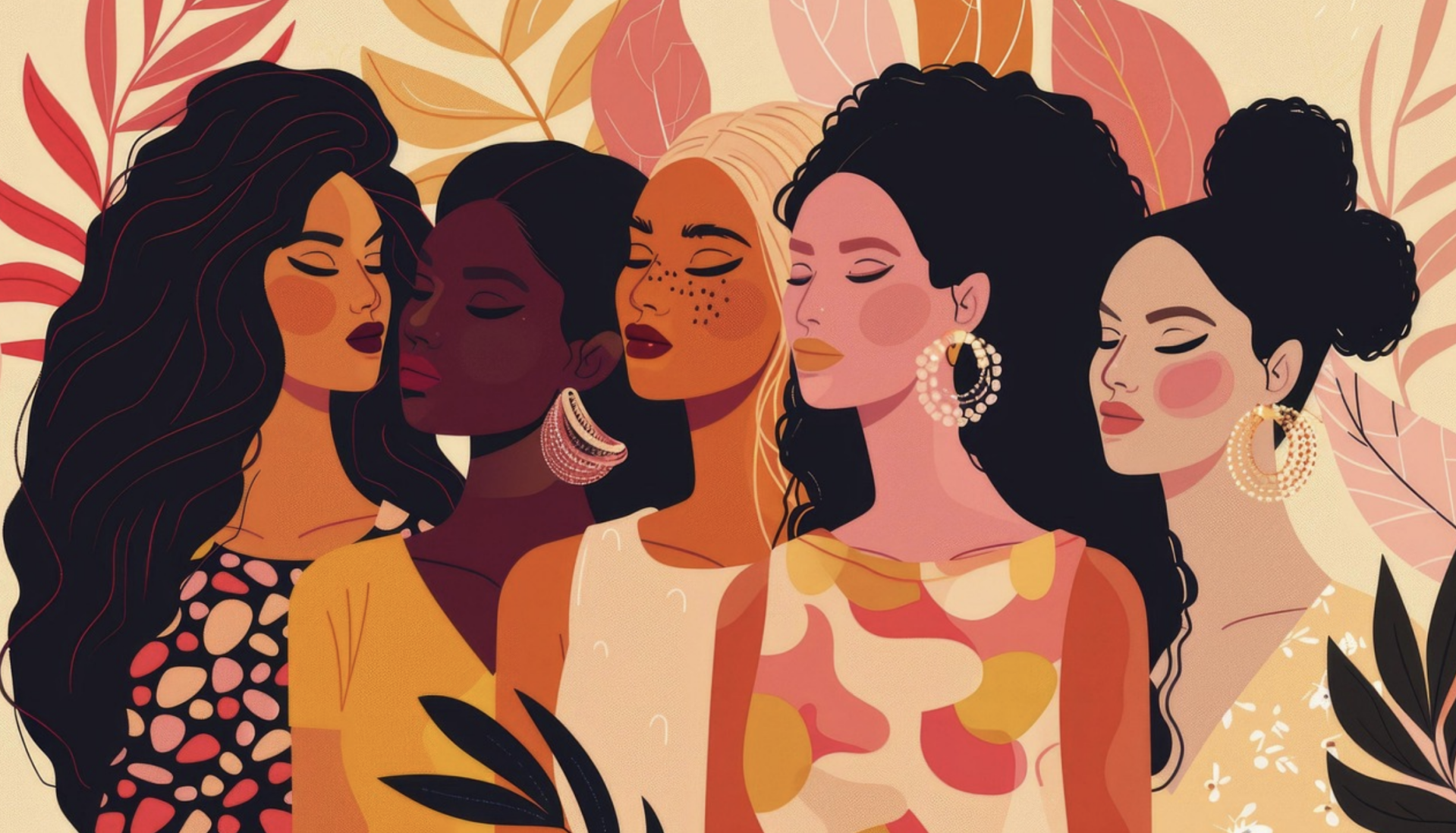
🌍 Vocabulaire thématique – Diversité et inclusion
Ce vocabulaire est particulièrement utile pour parler des discriminations, de l'égalité, des droits civiques, de la représentation et de l'inclusion dans la société.
| Anglais | Français |
|---|---|
| diversity | diversité |
| inclusion | inclusion |
| equality | égalité |
| equity | équité |
| discrimination | discrimination |
| prejudice | préjugé |
| stereotype | stéréotype |
| bias | partialité, préjugé |
| minority | minorité |
| ethnicity | ethnicité |
| race | race |
| gender | genre |
| sexual orientation | orientation sexuelle |
| disability | handicap |
| ableism | validisme |
| accessibility | accessibilité |
| representation | représentation |
| underrepresentation | sous-représentation |
| tokenism | inclusion de façade (tokenisme) |
| empowerment | autonomisation, renforcement |
| to empower | donner du pouvoir |
| to marginalise | marginaliser |
| to advocate | plaider (pour une cause) |
| awareness | sensibilisation |
| safe space | espace sécurisé |
| civil rights | droits civiques |
| equal opportunities | égalité des chances |
| glass ceiling | plafond de verre |
| microaggression | micro-agression |
| intersectionality | intersectionnalité |
| to embrace difference | accueillir la différence |
| to foster inclusion | favoriser l’inclusion |
📚 Grammaire – Exprimer le souhait, le regret et la nécessité
L’axe « Diversité et inclusion » se prête particulièrement bien à l’expression des aspirations, des espoirs et des regrets liés aux injustices, ainsi qu’à l’expression de la nécessité d’agir.
A. Wish / If only : exprimer un souhait ou un regret
| Structure | Usage | Exemple |
|---|---|---|
| Wish + past simple | Souhait concernant le présent (situation contraire à la réalité). | I wish people were more tolerant. |
| Wish + past perfect | Regret concernant le passé. | She wishes she had spoken out against discrimination. |
| Wish + would + base verbale | Souhait qu’une personne ou une situation change (espoir ou agacement). | I wish politicians would pass stronger anti-discrimination laws. |
| If only | Plus emphatique que wish ; suit les mêmes règles grammaticales. | If only there were more disabled characters in films. |
B. It's time / It's high time : exprimer l'urgence
Ces structures permettent d'indiquer qu'il est grand temps de faire évoluer une situation.
| Structure | Utilisation | Exemple |
|---|---|---|
| It's time + sujet + past simple | Exprime qu'il est temps qu'une action soit entreprise. | It's time society recognised the value of diversity. |
| It's high time + sujet + past simple | Version plus forte et plus insistante. | It's high time we put an end to gender pay gaps. |
C. Structures pour exprimer l’obligation morale et la recommandation
| Structure | Valeur | Exemple |
|---|---|---|
| should / ought to | Conseil ou recommandation morale. | The media should represent all communities fairly. |
| must / have to | Obligation forte ou devoir moral. | Governments must guarantee equal opportunities for all citizens. |
| need to | Nécessité ou besoin d'agir. | We need to challenge our own biases. |
La lutte pour l’égalité et l’inclusion dans le monde anglophone
Les sociétés anglophones ont été le théâtre de profondes inégalités, mais aussi de puissants mouvements pour l’inclusion. Aux États-Unis, la ségrégation raciale a perduré jusqu’au Civil Rights Act de 1964. Le mouvement des droits civiques, porté par Martin Luther King, Rosa Parks ou Malcolm X, a permis de renverser les lois ségrégationnistes. Pourtant, le racisme systémique persiste, comme l’ont rappelé les manifestations Black Lives Matter après la mort de George Floyd en 2020.
Au Royaume-Uni, l’Equality Act de 2010 a consolidé les lois anti-discrimination en protégeant neuf caractéristiques, dont l’âge, le handicap, le sexe, la race, la religion et l’orientation sexuelle. Le mariage homosexuel a été légalisé en Angleterre et au Pays de Galles en 2013, aux États-Unis en 2015 par la Cour suprême, et en Australie en 2017 après un référendum.
Le Canada fait figure de pionnier avec sa politique officielle de multiculturalisme (1971) et sa Charte des droits et libertés (1982), qui garantit l’égalité de tous les citoyens. L’inclusion des peuples autochtones reste cependant un défi majeur, comme en témoigne le travail de la Commission de vérité et réconciliation.
La représentation dans les médias et la culture populaire est également devenue un enjeu central. Pendant longtemps, les films et séries hollywoodiens offraient une image stéréotypée, voire inexistante, des minorités. Le succès de films comme Black Panther (2018), avec un casting majoritairement noir, ou Crazy Rich Asians (2018), première production hollywoodienne entièrement asiatique depuis vingt-cinq ans, a montré que la diversité peut être un atout commercial et culturel. Le mouvement #OscarsSoWhite a dénoncé le manque de diversité dans l’industrie cinématographique, poussant l’Académie à réformer ses critères.
L’inclusion des personnes handicapées est un autre combat. L’Americans with Disabilities Act (1990) aux États-Unis a interdit les discriminations fondées sur le handicap et imposé des aménagements dans les lieux publics. Au Royaume-Uni, des campagnes comme « Scope » militent pour une société où les personnes handicapées sont représentées et valorisées.
Ainsi, la diversité et l’inclusion ne sont pas des acquis définitifs : elles se construisent jour après jour, au prix de luttes politiques, sociales et culturelles.
Représentation et diversité dans les médias anglophones
La question de la représentation dans les médias est centrale dans le débat sur l’inclusion. Les films, les séries, la publicité et les journaux façonnent notre perception du monde. Lorsque certains groupes sont absents ou caricaturés, cela renforce les stéréotypes et l’exclusion.
À Hollywood, la diversité a longtemps été absente devant et derrière la caméra. Le mouvement #OscarsSoWhite, lancé en 2015, a dénoncé le fait que les nominations aux Oscars étaient très majoritairement blanches. Depuis, l’Académie des Oscars a modifié ses règles pour encourager une meilleure représentation. Des films comme Moonlight (2016), qui explore l’identité d’un jeune homme noir et homosexuel, ou Everything Everywhere All at Once (2022), porté par un casting majoritairement asiatique, ont été salués.
Au Royaume-Uni, la BBC s’est engagée à augmenter la diversité dans ses programmes d’ici 2025. L’actrice Rose Ayling-Ellis, sourde, a remporté Strictly Come Dancing en 2021, marquant une victoire symbolique pour la communauté sourde.
Dans la littérature jeunesse, des autrices comme Malorie Blackman (Noughts & Crosses) ou Jacqueline Wilson abordent le racisme, le handicap ou la pauvreté. Les appels à « des livres qui ressemblent à leurs lecteurs » (mirrors and windows) se multiplient.
Cependant, des résistances demeurent. Certains dénoncent un « wokisme » qui imposerait des quotas. Le débat reste vif entre ceux qui voient l’inclusion comme un progrès nécessaire et ceux qui la perçoivent comme une contrainte. Pour les chercheurs en sciences sociales, la diversité n’est pas une menace mais un enrichissement, à condition qu’elle ne soit pas cosmétique (tokenism).
Scientific innovation has transformed our daily lives. However, every technological breakthrough raises ethical questions. Governments, scientists and citizens all share responsibility for ensuring that progress benefits humanity while protecting the environment and individual freedoms.
Exercices
Grammaire
-
Réécrivez la phrase en utilisant wish : Unfortunately, there are not enough women in leadership positions. → I wish there were more women in leadership positions.
-
Transformez avec it’s time : We should stop ignoring microaggressions. → It’s time we stopped ignoring microaggressions.
-
Traduisez : « Si seulement les manuels scolaires étaient plus inclusifs. » → If only school textbooks were more inclusive.
Expression écrite
Sujet : You have read the article “Why Seeing Ourselves on Screen Matters”. Write a short essay (150-180 words) in which you :
-
Explain why representation in media is important.
-
Discuss whether quotas (e.g., a minimum number of minority characters) are a good solution.
-
Give your personal opinion.
Consignes : structurez votre essai (introduction, développement, conclusion), utilisez au moins trois connecteurs logiques et deux expressions du vocabulaire thématique.
Expression orale
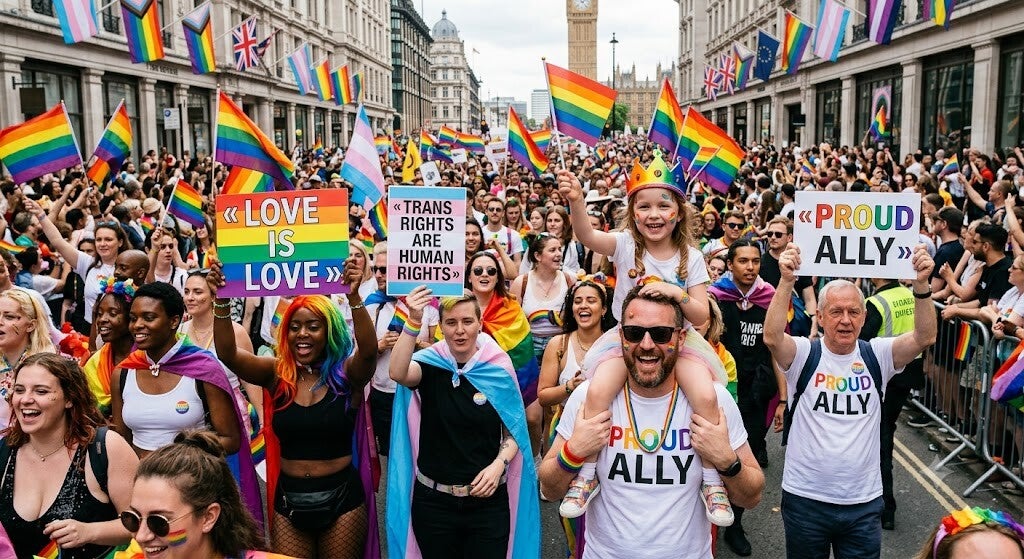
Situation : Vous présentez le document iconographique ci-dessus : une photographie d’une marche des fiertés (Pride) à Londres. On y voit une foule très diverse en termes d’âge, d’origine, de genre. Des personnes brandissent des pancartes avec les slogans : « Love is Love », « Trans Rights Are Human Rights », « Proud Ally ». Des drapeaux arc-en-ciel sont partout. Un enfant est assis sur les épaules de son père, tous deux souriant.
Problématique suggérée : How do events like Pride marches promote diversity and inclusion?
Points à aborder :
-
Description (foule, pancartes, diversité des participants).
-
Signification : célébration de l’identité, visibilité, soutien des alliés, lutte contre les discriminations.
-
Lien avec l’axe : diversité, inclusion, droits humains, évolution des mentalités.
-
Opinion personnelle : ces événements sont-ils encore nécessaires aujourd’hui ?
Compréhension écrite
Article (adapté de The Guardian, 2023)
Why Seeing Ourselves on Screen Matters
When 12-year-old Amaya watched Black Panther for the first time, she burst into tears. “Finally, a superhero who looks like me,” she told her mother. Amaya, who is of Nigerian descent, had never seen a blockbuster movie with a predominantly Black cast. “It made me feel proud of my heritage,” she said.
Representation in film and television is not just about entertainment. Studies show that what we watch shapes our perception of reality. When children see characters who share their identity – whether in terms of race, gender, sexual orientation or disability – it boosts their self-esteem and broadens their sense of what is possible. Conversely, when certain groups are consistently absent or depicted as villains, the message is clear: you don’t belong.
The industry is slowly changing. The success of films like Crazy Rich Asians, Coco and Encanto has proved that diversity sells. Streaming platforms are investing in stories from underrepresented voices. However, critics warn against “tokenism”: including a single minority character simply to appear inclusive, without giving them a meaningful story. “True inclusion means telling authentic stories, not just ticking boxes,” says Dr Patel, a media studies professor.
For Amaya, the impact is personal. “Black Panther showed me I could be the hero. Now I want to become a filmmaker and tell stories that haven’t been told.”
Questions :
-
What was Amaya’s reaction when she watched Black Panther, and why?
-
According to the article, what are the positive effects of seeing oneself represented on screen?
-
What negative effect can the absence of representation have?
-
Explain the term “tokenism” as used in the article.
-
What is Amaya’s ambition now?
Compréhension orale
script d'un reportage radio
Voix : On “Young Voices” today, we have Liam, a 17-year-old from Dublin. Liam uses a wheelchair and has become an activist for disability rights. Liam, what inspired you to speak out?
Liam : “Last year, my school organised a trip to a museum, and I couldn’t go because the bus wasn’t accessible. I was angry, but mostly I felt invisible. Then I realised I wasn’t alone – so many of my friends with disabilities face the same barriers every day. I started an Instagram account called ‘Access for All’, and it just took off.”
Journaliste : What kind of barriers do you talk about?
Liam : “Physical ones, obviously – steps, narrow doors, no lifts. But also invisible barriers. People assume you can’t do things. They talk to your assistant instead of you. It’s called ableism – discrimination against disabled people, even when it’s not intentional.”
Journaliste : What changes would you like to see?
Liam : “First, universal design: everything should be built to be accessible from the start, not added later as an afterthought. Second, representation. When was the last time you saw a disabled person in a TV advert, just living a normal life? We exist. We have dreams, jobs, relationships. Society needs to include us, not just accommodate us.”
Questions :
-
What event made Liam decide to become an activist?
-
Give one example of a physical barrier and one of an invisible barrier he mentions.
-
What is “ableism” according to Liam?
-
What are the two changes he would like to see?
-
Explain what Liam means by “Society needs to include us, not just accommodate us.”
Contrôle continu
A. Compréhension écrite (10 points)
Lisez le texte suivant (adapté d’un article sur l’inclusion des personnes handicapées au Royaume-Uni) :
“In the UK, one in five people has a disability, yet they remain significantly underrepresented in the workplace. According to a 2022 report, only 53% of disabled adults are employed, compared to 82% of non-disabled adults. This employment gap is partly due to physical barriers, such as inaccessible offices or lack of assistive technology, but also to widespread prejudice. Many employers wrongly assume that hiring a disabled person will be expensive or complicated. Campaigners argue that inclusive hiring is not charity: it is common sense. Companies with diverse workforces perform better financially and are more innovative. The UK government has introduced the Disability Confident scheme to encourage businesses to recruit and retain disabled employees. However, progress remains slow. ‘We don’t just need ramps and lifts,’ says activist Sarah Connor. ‘We need a change of attitude.’”
Questions :
-
What percentage of disabled adults are employed in the UK according to the text? (2 pts)
-
Give one physical barrier and one attitudinal barrier mentioned. (2 pts)
-
True or false? Companies with diverse workforces perform worse financially. Justify with a quotation. (2 pts)
-
What is the Disability Confident scheme? (2 pts)
-
Explain what Sarah Connor means by “We don’t just need ramps and lifts; we need a change of attitude.” (2 pts)
B. Compréhension orale (10 points)
Script lu deux fois :
“My name is Jade, and I’m a transgender teenager. When I came out to my parents, they were confused, but they loved me and eventually accepted me. School was harder. Some students made jokes behind my back, and the teachers didn’t know how to respond. There was no gender-neutral toilet, so I had to choose between two doors that both felt wrong. But joining a local LGBTQ+ youth group changed everything. For the first time, I felt I belonged. We ran a campaign asking local shops to put ‘Everyone Welcome’ stickers in their windows. The support we received was overwhelming. It showed me that inclusion is not just about laws – it’s about everyday gestures. A sticker might seem small, but for someone like me, it means: you are safe here.”
Questions :
-
How did Jade’s parents react to her coming out? (2 pts)
-
What difficulties did she face at school? (2 pts)
-
What role did the LGBTQ+ youth group play in her life? (2 pts)
-
What action did the group take in the local community? (2 pts)
-
Why does Jade say “inclusion is not just about laws – it’s about everyday gestures”? (2 pts)
C. Expression écrite (10 points)
Traitez au choix l’un des deux sujets (80-100 mots) :
-
Sujet 1 : Should schools teach about diversity and inclusion from an early age? Justify.
-
Sujet 2 : Write a short paragraph about a person or a character who inspires you because they promote inclusion.
D. Expression orale (10 points)
À préparer en 10 minutes, à présenter en 5 minutes.
Vous présentez la citation suivante de la militante américaine Audre Lorde : “It is not our differences that divide us. It is our inability to recognize, accept, and celebrate those differences.”
Expliquez ce que cette citation signifie pour vous, donnez des exemples et reliez-la à l’axe « Diversité et inclusion ».