Compréhension écrite : exemple de devoir sur le thème "Territoires et mémoire"
Entraînez-vous à la compréhension écrite en anglais sur l’axe Territoires et mémoire (Territory and Memory) du programme de Première. Cette ressource vous permet de travailler les compétences attendues en contrôle continu : compréhension de documents, acquisition du vocabulaire historique et culturel, analyse des enjeux liés au patrimoine, aux conflits, à la mémoire collective et aux identités. Un entraînement pour améliorer votre niveau en anglais et préparer sereinement les évaluations du bac.
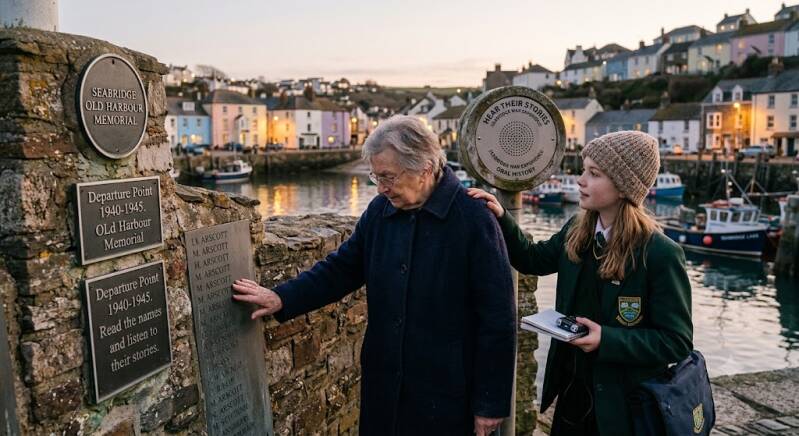
Document : Remembering Through Places
Every year, thousands of visitors travel to the small coastal town of Seabridge. At first sight, it looks like a peaceful place with colourful houses, fishing boats and narrow streets. Yet behind this quiet landscape lies an important chapter of the country’s history.
During the Second World War, Seabridge was the departure point for hundreds of families forced to leave their homes because of the fighting. Many never returned. Today, the old harbour has become a memorial where visitors can read the names of those who left and listen to recordings of their personal stories.
For local residents, preserving the harbour is not only about protecting old buildings. It is also about keeping alive the memory of previous generations. Every spring, schools organise ceremonies during which students meet historians, interview elderly residents and collect family photographs. These activities help young people understand that history is not only found in textbooks but also in the places where people have lived.
Some people believe that towns should focus only on the future instead of investing money in historical sites. Others argue that forgetting the past makes it more difficult to understand the present and to build a peaceful future.
Today, Seabridge welcomes tourists from around the world. Many visitors say that walking through the harbour helps them realise that every place has stories worth remembering and passing on to future generations.
Adapted from a fictional magazine article.
Vocabulaire essentiel :
Territory and Memory
Maîtriser ce vocabulaire vous aidera à mieux comprendre les documents de compréhension écrite sur l'axe Territoires et mémoire (Territory and Memory) et à enrichir vos réponses en anglais.
| English | Français |
|---|---|
| heritage | patrimoine |
| memorial | mémorial |
| remembrance | souvenir |
| commemoration | commémoration |
| witness | témoin |
| legacy | héritage |
| ancestor | ancêtre |
| historical site | site historique |
| monument | monument |
| collective memory | mémoire collective |
Questions
A. Compréhension générale (6 points)
1. Choose the correct answer.
The text is mainly about:
a) tourism on the British coast
b) the importance of preserving places of memory
c) the history of fishing villages
2. Why is Seabridge an important place?
Answer using two pieces of information from the text.
3. What is the author’s main message?
Answer in English.
B – Compréhension détaillée (8 points)
4. Answer :
- Historical event mentioned ?
Present-day memorial ?
School activities ?
Debate presented in the text ?
5. True or False? Justify each answer with a quotation.
a) The harbour has remained exactly the same since the war.
b) Students take part in activities linked to local history.
c) Everyone agrees that historical sites should be preserved.
6. Explain the meaning of the sentence :
“History is not only found in textbooks but also in the places where people have lived.”
Answer in English or French.
C – Interpretation (6 points)
7. Why do places play an important role in preserving collective memory?
Write 50 to 70 words.
8. According to the author, why is it important for young people to learn about local history?
Write 60 to 80 words.
Réponses
Cliquez sur chaque item pour afficher les réponse
